
Show all 20 posts from this thread on one page
|
Show all 20 posts from this thread on one page |
UKC Forums (http://forums.ukcdogs.com/index.php)
- UKC Coonhounds (http://forums.ukcdogs.com/forumdisplay.php?forumid=4)
-- Dna Analysis (http://forums.ukcdogs.com/showthread.php?threadid=245251)
Dna Analysis
how do u read a dna analysis i mean what is the deal with all the letters at the bottom does it prove anything askin because i have my dogs dna but its all greek to me
__________________
'PR'GUINN'S MIDNIGHT CRUIZIN BRUIZER(needs 1st to be nitech)gone but not forgottten
NITECH'PR'STYLISH SCAR(3 wins towards grand)gone but not forgotten
NITECH'PR'BACKWOOD'S STYLISH OZZIE(4 wins towards grand)
NITECH 'PR' BLACKWATER BUD owned by Sean Jenkins and Paige Guinn - 2012 B&T days cast winner - 2012 BBCHA FALL ROUND UP 2nd place nitech winner
Nitech 'PR' JENKINS OL' CROW owned by Sean Jenkins and John Guinn (Gone But Not Forgotten 9/02/2014)
phone 618-572-0287
It really means.....
NOTHING.
The genetic markers used in DNA analysis are nothing more than identification markers....
Lets say that fingerprint traits were genetic. You inherited 10 different characteristics from your mother, and 10 from your father. AA and Aa are the characteristics for the little swirl in the middle of your right index finger. AA means that you would have a very tight swirl, Aa means that you would have a smaller, more open swirl.....your have a 50% chance of having a tight swirl....you are going to get the A or the A from one parent, and an A or an a from the other parent.
The possible cominations here are AA and Aa.
The only thing that these genetic markers are used for in dogs is to determine parentage.
8th grade science class...Mendel's Square...
__________________
Joe Newlin
UKC Cur Advocate
Home of Oak Ridge Kennels
JOE ----you can read my DNA ----DON'T NO ANYTHING
HAPPY HOILDAYS TO YOU AND THE GOOD LOOKING ONE --
__________________
ALLNITER DOUG CHEEK
ALWAYS GO BY THE RULES AND NEVER A PROBLEM
quote:
Originally posted by Oak Ridge
It really means.....
NOTHING.
The genetic markers used in DNA analysis are nothing more than identification markers....
Lets say that fingerprint traits were genetic. You inherited 10 different characteristics from your mother, and 10 from your father. AA and Aa are the characteristics for the little swirl in the middle of your right index finger. AA means that you would have a very tight swirl, Aa means that you would have a smaller, more open swirl.....your have a 50% chance of having a tight swirl....you are going to get the A or the A from one parent, and an A or an a from the other parent.
The possible cominations here are AA and Aa.
The only thing that these genetic markers are used for in dogs is to determine parentage.
8th grade science class...Mendel's Square...
__________________
2012 National Grand Show Champion, World Show Bluetick Female CCH GRCH 'PR' Southern Flame Blame it on the Rain (Rain)
2012 Purina Show Bluetick Breed Winner GRCH 'PR' Southern Flame Grt Balls o' Fire (Jerry Lee)
2013 World Champion Bluetick, 2013 AO Overall Bred By winner GRCH 'PR' Sexy and I know It (breeder)
2015 AO Overall Dual Champion NTCH GRCH 'PR' Sexy and I know It (breeder/owner/handler)
2016 Grand American Overall Dual Ch, Overall Show CHampion NTCH GRCH 'PR' Sexy and I know It
AKC CSG, UKC CCH GRCH 'PR' Southern Flame Bad News Bandit (Bandit)
2010 National Grand Champion Bluetick
2013 AO Bluetick Stud Dog winner
CCH GCH 'PR' Southern Flame Elvira - the one that started it all
southernflamekennel@earthlink.net
RIP Southern Flame Elvira (the cornerstone of the kennel) 5/16/02-1/17/14
RIP Southern Flame Scarlet (the lone Redbone) 5/11/01-7/19/13
RIP Southern Flame Wild Irish Rose (Rosie) 6/15/09 - 3/12/15
RIP Southern Flame Too Hot to Trot (Bonnie) 3/27/07 - 4/20/15
RIP Southern Flame Bad News Bandit (Bandit)
RIP Southern Flame Triple Trouble (TT) 12/17/04 - 11/19/16
RIP Southern Flame Blame it on the Rain (Rain)
RIP AdeleMay's a Smokey Bandit (Adele)
RIP Southern Flame I Like Ike (Ike)
RIP Bella the Beagle
Bear, Jerry Lee, Camo, Maybellene, Lacy, Thor, Sissy, Merle, Tina, Bridgette - the Blueticks, Hollie - the Aussie
quote:
Originally posted by Cynthia
It would be nice to know what, if anything, the letters stood far, as in your example. at least that way I could know color combos, ears, etc.
__________________
Joe Newlin
UKC Cur Advocate
Home of Oak Ridge Kennels
Well actually it is parentage AND identification. Two things. 
quote:
Originally posted by JiM
Well actually it is parentage AND identification. Two things.
__________________
Joe Newlin
UKC Cur Advocate
Home of Oak Ridge Kennels
Question
OKAY - so does that mean that 2 pups with identical in looks in the same litter could have IDENTICAL letters on their DNA certificates? Or is there such a situation with dogs?
__________________
SKY
___________________
Author of the novel "Follow Jennifer"
Re: Question
quote:
Originally posted by skyblu
OKAY - so does that mean that 2 pups with identical in looks in the same litter could have IDENTICAL letters on their DNA certificates? Or is there such a situation with dogs?
__________________
Joe Newlin
UKC Cur Advocate
Home of Oak Ridge Kennels
Re: Re: Question
quote:
Originally posted by Oak Ridge
NO, it certainly does not mean that.
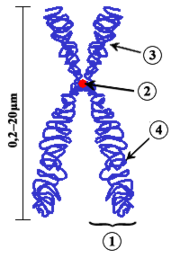
A little DNA lesson is in order. Dogs have 38 pairs of chromosomes, half of which they inherit from each parent. Each of these chomosomes are home to 50,000 to 100,000 pairs of genes.
a locus (plural loci) is a fixed position on a chromosome, such as the position of a gene or a biomarker (genetic marker). A variant of the DNA sequence at a given locus is called an allele.
Now, without going into a whole genetics dissertation, please understand these loci are broken down even further. What is used in dogs to establish parentage is known as micrsatellites, or predictable differences within each species at specified locations in the species.
What you received is a measurement of 9 different "loci" that were selected to establish parentage. NOTHING MORE, NOTHING LESS.....
There is no tie to behavior, traits, or actions. Just the fact that we can predict what will be passed on from each parent.
EXAMPLE
I had a dual sired litter a year or so ago. The pups had to be DNA tested as well as both the sire and the Dam before we could determine which sire for which pup....
Pup #1
Sire CD DE AB EF DE GJ CD BD BB BB XY(this one is sex )
Pup CD DD BC FG DE GG BC BD BG BB XY
Dam BC BD BC EG AE GI BE GD BG BB XX
Now....let's break this down a little....understand that we have picked 10 different loci out of as many as 3.8 MILLION available gene pairs....but this is enough to establish parentage.
If you look at the top row, that is the sire's DNA profile, the middle is the pups, and the bottom is the dam's. Know that for each of the locations, the pup will inherit one letter from each parent. If you follow this out, you will see that pattern.
Now, in the pup, let's take the second measurement...the pup is DD That means that if he (we know it is a he because of the xy pattern on the last measurement) is bred, he can ONLY pass on that D in that location.
Please understand that there is no correlation between "traits" and the parentage microsattlelites in dog DNA.
__________________
Pine Hill Kennels
Loyd McIntire
Joe
Where you said the pup could only pass on the "D" in this area because he is "DD" , does this mean dogs with a lot of same letter groups ( AA DD FF GG AA EE) Would be dominant reproducers due to only being able to pass on the one ..And I dont mean it would have to be a good reproducer , but dominant due to this......Hope you get what I am trying too ask here..
Thanks, Jim
I think what Joe has said is that nothing,Nothing,NOTHING.....can be determined from those DNA papers aside from verifing parentage.
Re: Re: Question
quote:
Originally posted by Oak Ridge
NO, it certainly does not mean that.
A little DNA lesson is in order. Dogs have 38 pairs of chromosomes, half of which they inherit from each parent. Each of these chomosomes are home to 50,000 to 100,000 pairs of genes.
a locus (plural loci) is a fixed position on a chromosome, such as the position of a gene or a biomarker (genetic marker). A variant of the DNA sequence at a given locus is called an allele.
Now, without going into a whole genetics dissertation, please understand these loci are broken down even further. What is used in dogs to establish parentage is known as micrsatellites, or predictable differences within each species at specified locations in the species.
What you received is a measurement of 9 different "loci" that were selected to establish parentage. NOTHING MORE, NOTHING LESS.....
There is no tie to behavior, traits, or actions. Just the fact that we can predict what will be passed on from each parent.
EXAMPLE
I had a dual sired litter a year or so ago. The pups had to be DNA tested as well as both the sire and the Dam before we could determine which sire for which pup....
Pup #1
Sire CD DE AB EF DE GJ CD BD BB BB XY(this one is sex )
Pup CD DD BC FG DE GG BC BD BG BB XY
Dam BC BD BC EG AE GI BE GD BG BB XX
Now....let's break this down a little....understand that we have picked 10 different loci out of as many as 3.8 MILLION available gene pairs....but this is enough to establish parentage.
If you look at the top row, that is the sire's DNA profile, the middle is the pups, and the bottom is the dam's. Know that for each of the locations, the pup will inherit one letter from each parent. If you follow this out, you will see that pattern.
Now, in the pup, let's take the second measurement...the pup is DD That means that if he (we know it is a he because of the xy pattern on the last measurement) is bred, he can ONLY pass on that D in that location.
Please understand that there is no correlation between "traits" and the parentage microsattlelites in dog DNA.
__________________
GUN RIVER KENNELS
Paul Patrick
Austin Patrick
Dustin Patrick
Tyler Patrick
Re: Re: Re: Question
quote:
Originally posted by TREMOR
So Joe, if i bred a nice female and had a liter of pups and had them all dna'd and one of the pups dna markers matched 5 of the 9 to the mother this would still not say she would be more like her mamma?

__________________
Joe Newlin
UKC Cur Advocate
Home of Oak Ridge Kennels
oakridge
Thanks Joe, that makes me wonder how someone can tell me that ther dog is 70% fixed genticlly. Also i find this entire subject very intruging and it makes me wish i had the smarts to break the codes in the genetics of dogs to find those desirable traits. Thanks joe i always enjoy reading your post when i have time.
__________________
GUN RIVER KENNELS
Paul Patrick
Austin Patrick
Dustin Patrick
Tyler Patrick
thanks
yeah, thanks Joe
You absolutely can NOT use those DNA tests to claim "fixed" anything.
That's why myself, Joe, and Larry Atherton just to name a few get on here and explain this several times a year a piece LOL.
We just don't want people being tricked by fake science.
The science to prove parentage is 100% real, but to claim these markers are anything but markers is just not true.
BTW, The above is an excellent tutorial that would rival some college genetics classes. Very strong work there Joe.
__________________
Let's go huntin
professor vet MR. RICHARD GILL --ALWAYS TOLD ME ---he could get --size--color --hair coat--hunt --etc. but one think he could not always get was BRAINS in dogs
__________________
ALLNITER DOUG CHEEK
ALWAYS GO BY THE RULES AND NEVER A PROBLEM
Re: oakridge
quote:
Originally posted by TREMOR
Thanks Joe, that makes me wonder how someone can tell me that ther dog is 70% fixed genticlly. Also i find this entire subject very intruging and it makes me wish i had the smarts to break the codes in the genetics of dogs to find those desirable traits. Thanks joe i always enjoy reading your post when i have time.
__________________
Joe Newlin
UKC Cur Advocate
Home of Oak Ridge Kennels
"The reality is that much of what we breed our hounds for is subject to "nurture", how a pup is raised, trained, and handled....as much as it is in breeding."
nicely put Joe, that statement covers it all.
| All times are GMT. The time now is 11:27 PM. | Show all 20 posts from this thread on one page |
Powered by: vBulletin Version 2.3.0
Copyright © Jelsoft Enterprises Limited 2000 - 2002.
Copyright 2003-2020, United Kennel Club